



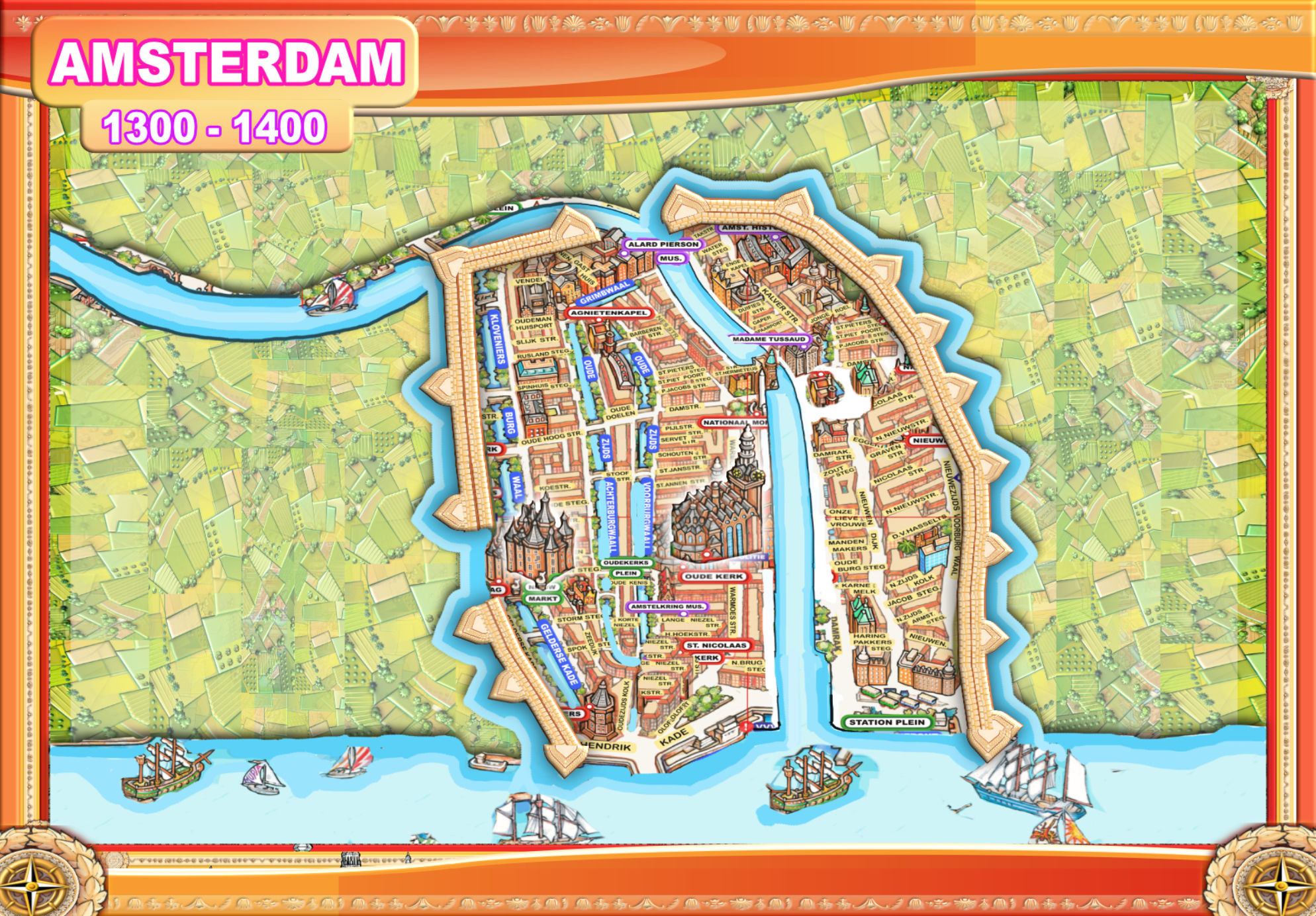
In the 1200s and 1300s, Amsterdam was a small, emerging settlement located on the banks of the Amstel River, primarily known for its natural surroundings of marshes and waterways. During this period, the city's development was still in its infancy, with a population that was modest compared to its future size.
The area began to see the construction of wooden homes, along with early signs of urban planning, including dikes and canals that would later define the city.
In the 1300s and 1400s, Amsterdam began to transform from a small village into a more significant urban center, marking a pivotal period in its history. By the early 14th century, the city had secured its place as a key trading hub in the Low Countries, largely due to its strategic location along the Amstel River.
Amsterdam’s population grew as merchants, artisans, and traders flocked to the city, attracted by its growing prosperity. The construction of canals and the expansion of dikes further facilitated trade and the control of water, enabling the city to develop into a more organized and economically dynamic settlement.
In the 14th century, Amsterdam was granted the right to hold markets, and by the end of the century, it was a prominent port for the trade of goods like grain, herring, and luxury items.
The city's influence continued to expand in the 15th century, with the construction of impressive buildings like the Old Church (Oude Kerk) and a thriving textile industry. Despite challenges such as the Black Death in the mid-14th century, Amsterdam's economy remained resilient, and the city began to establish a reputation for its wealth and growing political importance within the region.
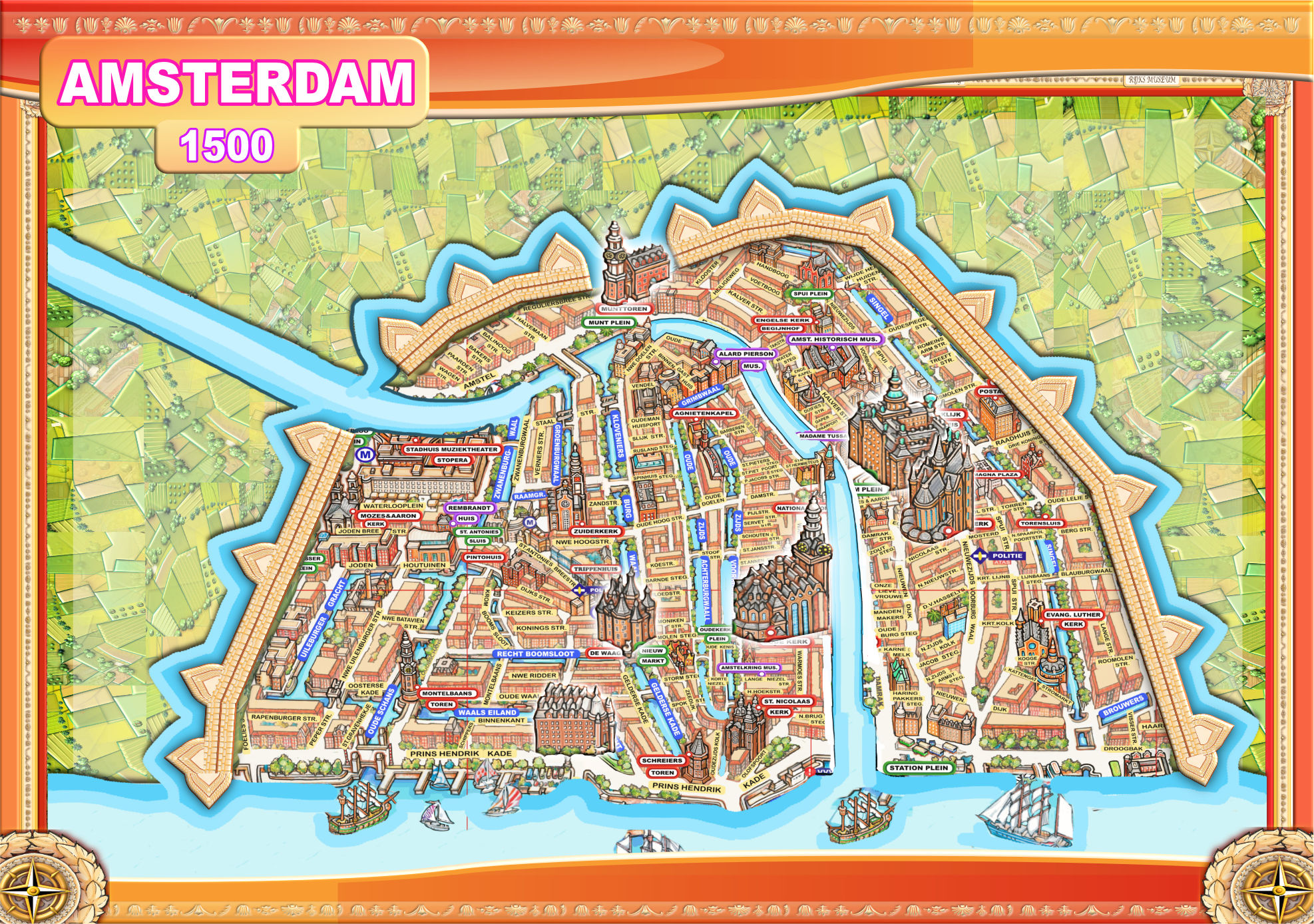
By 1500, Amsterdam had firmly established itself as one of the most important cities in the Netherlands, both economically and politically. The city had grown significantly in size and influence. Amsterdam’s bustling harbor facilitated trade across Europe and beyond.
The city's merchant class had become wealthy and powerful, laying the foundation for the financial innovations that would later define the Dutch Golden Age. By this time, Amsterdam
had a well-developed infrastructure, with an extensive network of canals, bridges, and a growing number of impressive buildings, including churches, guild halls, and the beginnings of what would become the city's iconic skyline.
The early 16th century also saw the rise of Amsterdam's role in the international banking sector, with its exchange and credit systems gaining prominence. While the city was still part of the Duchy of Burgundy under the rule of the Habsburgs, Amsterdam was increasingly asserting its independence and becoming a center of cultural and intellectual life, laying the groundwork for its later transformation into one of the world’s great financial and cultural capitals.
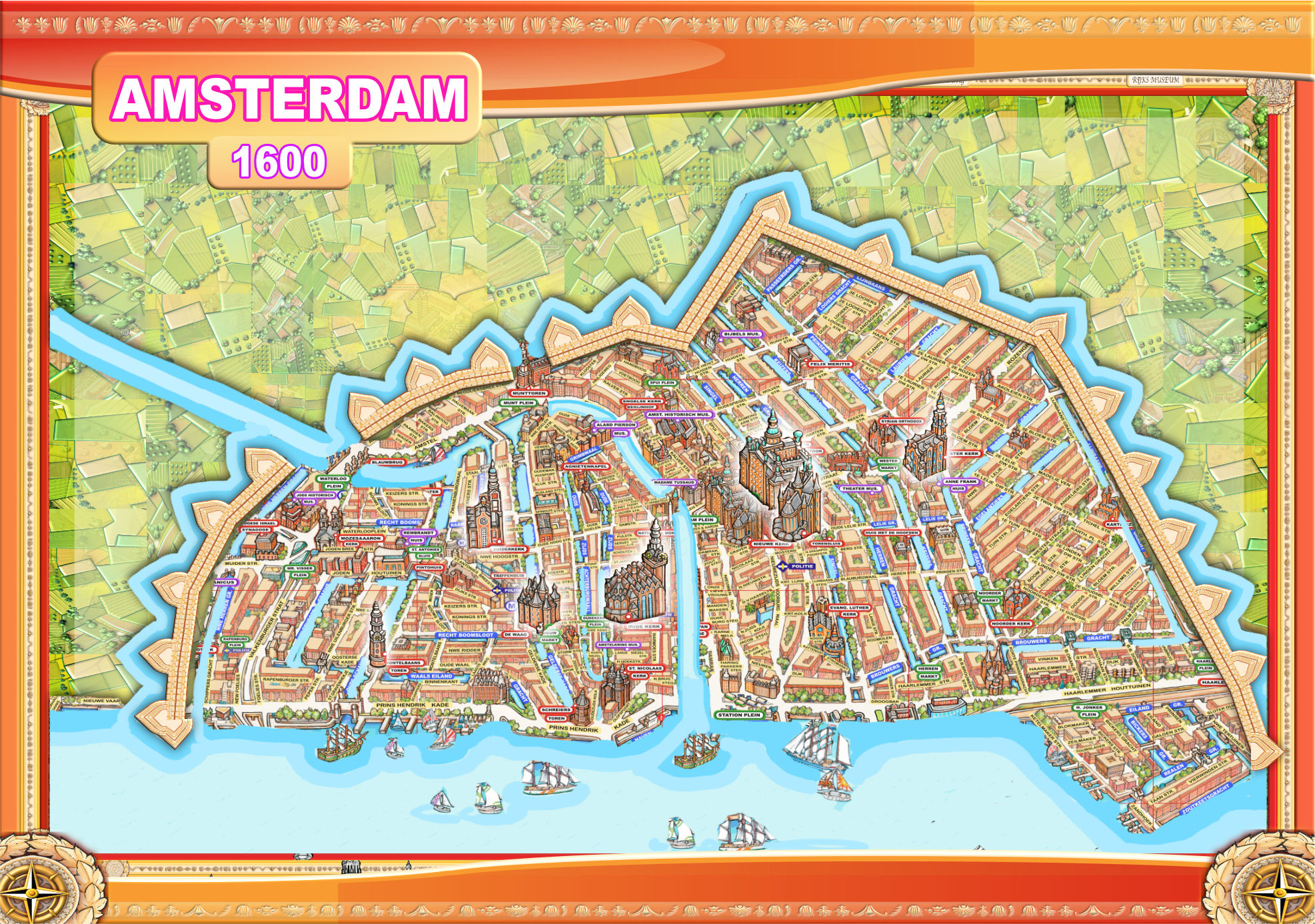
By 1600, Amsterdam had blossomed into one of the most influential cities in the world, a key player in global trade, finance, and culture. The city had experienced explosive growth during the 16th century, fueled by the Dutch Revolt and the subsequent independence of the Dutch Republic from Spain. Amsterdam’s economy was dominated by maritime commerce, with its harbor bustling with ships from across Europe, Africa, and the Americas.
The Dutch East India Company (VOC), founded in 1602, had its headquarters in Amsterdam, marking the beginning of the Netherlands' colonial empire and solidifying the city’s role as a financial powerhouse. Amsterdam's merchants and bankers pioneered innovations in global finance, such as the creation of the Amsterdam Stock Exchange, the world’s first formal stock market. This period also saw the flourishing of Dutch art, with painters like Rembrandt and Vermeer emerging in the city’s thriving cultural scene.
The city's population had swelled (200.000 inhabitants in 1660), and it was becoming renowned for its religious tolerance, drawing refugees and intellectuals from across Europe. Amsterdam’s canal network had expanded dramatically by this time, with elegant merchant houses lining the waterways, making it one of the most visually stunning cities in Europe.
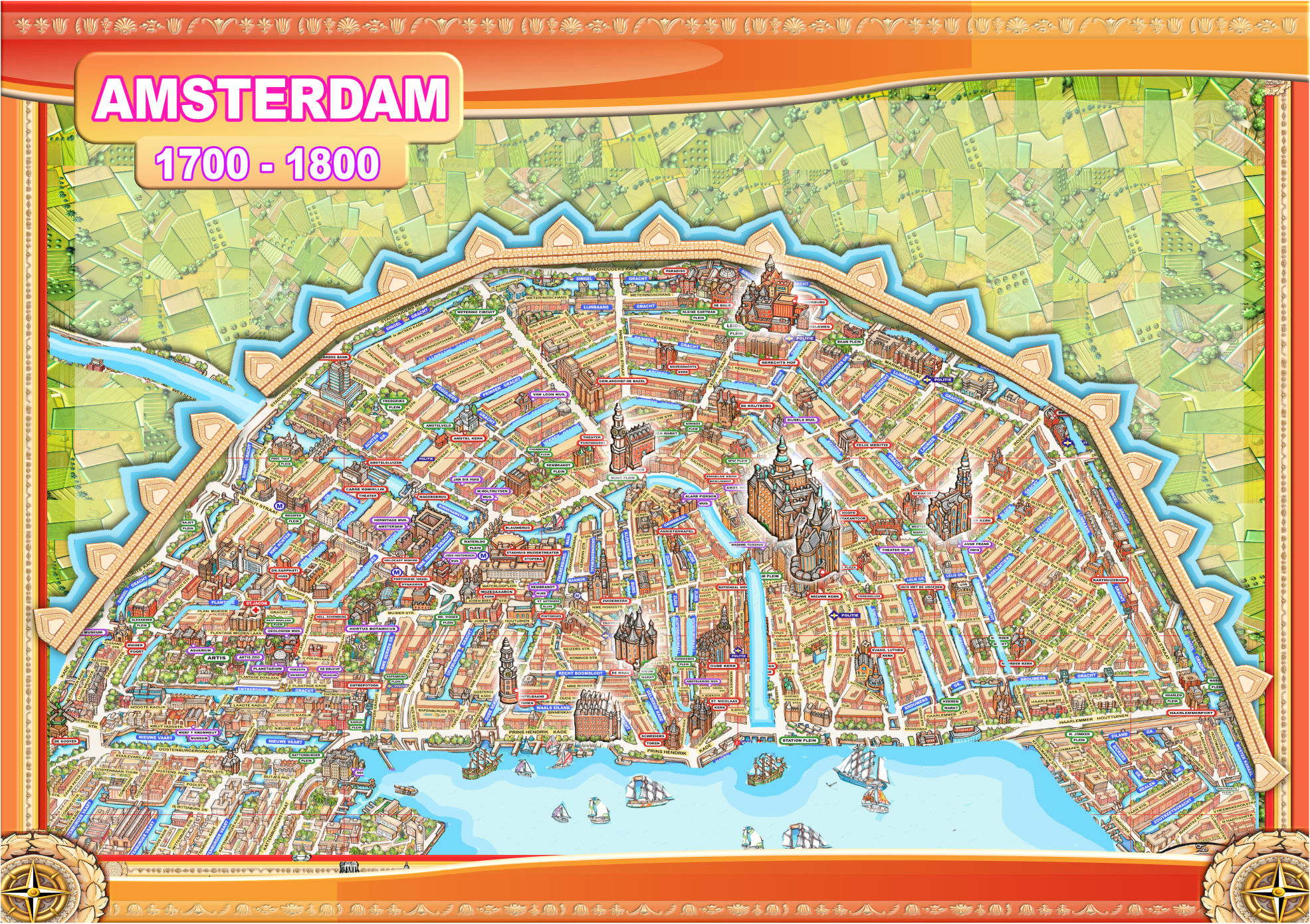
In the 1700s and 1800s, Amsterdam experienced both the height of its golden age and a gradual decline, shaped by shifting political and economic forces. In the early 18th century, the city remained a dominant center of global trade, banking, and culture. The Dutch East India Company (VOC) continued to fuel Amsterdam’s economy, making the city a crucial hub for colonial commerce, particularly in spices, textiles, and precious metals.
However, by the mid-1700s, the VOC's power began to wane due to internal mismanagement and competition from other European powers, which contributed to a slow economic decline. Amsterdam also faced the consequences of the broader European political shifts, including the rise of French power under Napoleon. In 1795, the city was briefly occupied by the French, and the Netherlands became the Batavian Republic, a satellite state of France.
The 19th century saw further upheaval with the Napoleonic Wars and the eventual establishment of the Kingdom of the Netherlands in 1815. The economic slump of the late 18th century was followed by a period of recovery in the 19th, as industrialization began to reshape Amsterdam’s economy. New industries such as textiles, shipbuilding, and printing emerged, though the city’s role in global finance was eclipsed by emerging centers like London.
Despite these challenges, the 19th century saw the expansion of Amsterdam’s infrastructure, including the construction of new canals, bridges, and the development of a more modern urban landscape, setting the stage for its resurgence as a major European city in the 20th century.
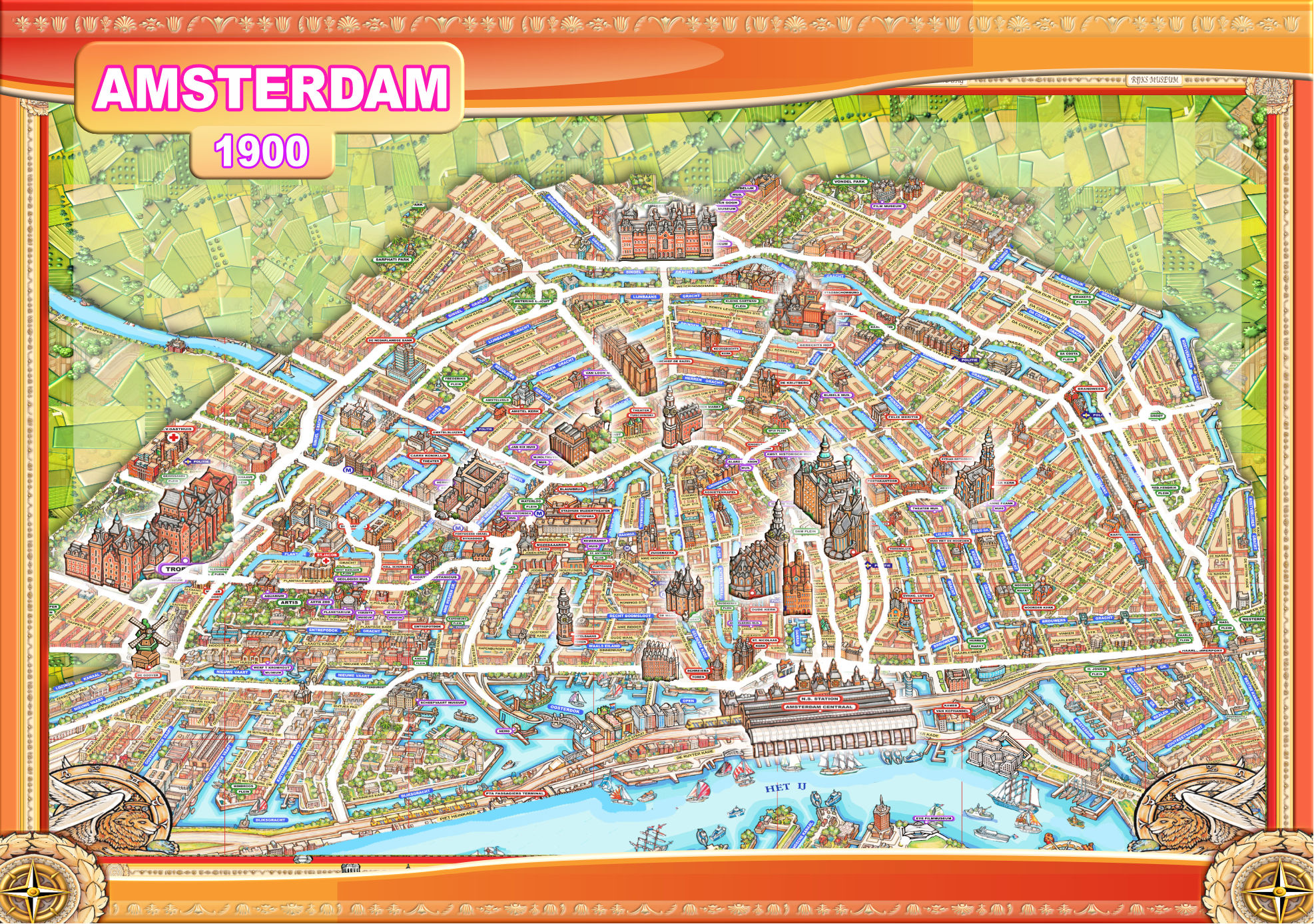
By 1900, Amsterdam had transformed into a modern, industrialized city, though it still retained much of its historic charm. The city had experienced rapid growth during the 19th century, driven by industrialization, urbanization, and the expansion of its port. The industrial revolution brought new factories, railways, and a booming economy.
Amsterdam began to modernize with the construction of new neighborhoods, such as the Zuid (South) district, and the development of modern infrastructure like electric trams and advanced sanitation systems. The early 20th century also saw Amsterdam’s role as a cultural and intellectual center, with institutions like the Rijksmuseum, Van Gogh Museum, and the Concertgebouw symbolizing its rich artistic heritage.
Politically, Amsterdam was an important part of the Kingdom of the Netherlands, and its status as the financial heart of the country remained strong.
At the same time, the city was also grappling with the social challenges of industrialization, including overcrowding, poverty, and labor unrest. Despite these tensions, Amsterdam remained a vibrant cosmopolitan city, attracting a mix of international trade, intellectual thought, and artistic innovation that would shape its identity in the 20th century.

 Maps © 2026 TerraNaviga.com
 Development © 2026 imb.gr